
Your Garage Door Springs Are Doing More Work Than You Think
Every time you open and close your garage door, the springs are doing the heavy lifting — literally. A standard two-car garage door can weigh anywhere from 150 to 250 pounds, and it's the springs that counterbalance all that weight so your opener doesn't have to do it alone. Over time, those springs wear out, and when they fail, your garage door can become inoperable or even dangerous.
For homeowners in Elizabethtown, where garages see daily use through hot summers and cold winters, understanding the lifespan of your garage door springs can save you from unexpected breakdowns and costly emergency repairs.
How Long Do Garage Door Springs Typically Last?
Most standard garage door springs are rated for approximately 10,000 cycles. One cycle equals one full open and one full close. If your household opens and closes the garage door four times a day, that works out to roughly seven to nine years of use before the springs reach the end of their expected lifespan.
However, several factors can shorten or extend that timeline:
- Frequency of use: Families with multiple drivers or those who use the garage as a primary entry point may cycle the door six to eight times per day, cutting the spring life down to five or six years.
- Climate and humidity: Kentucky's humid summers and occasional ice storms can cause corrosion on uncoated springs, accelerating wear.
- Maintenance habits: Springs that are regularly lubricated and inspected tend to last longer than neglected ones.
- Spring quality: Higher-quality, high-cycle springs (rated for 25,000 or even 50,000 cycles) are available and can last significantly longer, though they cost more upfront.
The Two Types of Garage Door Springs
Before we go further, it helps to understand the two main types of springs used in residential garage doors:
Torsion Springs
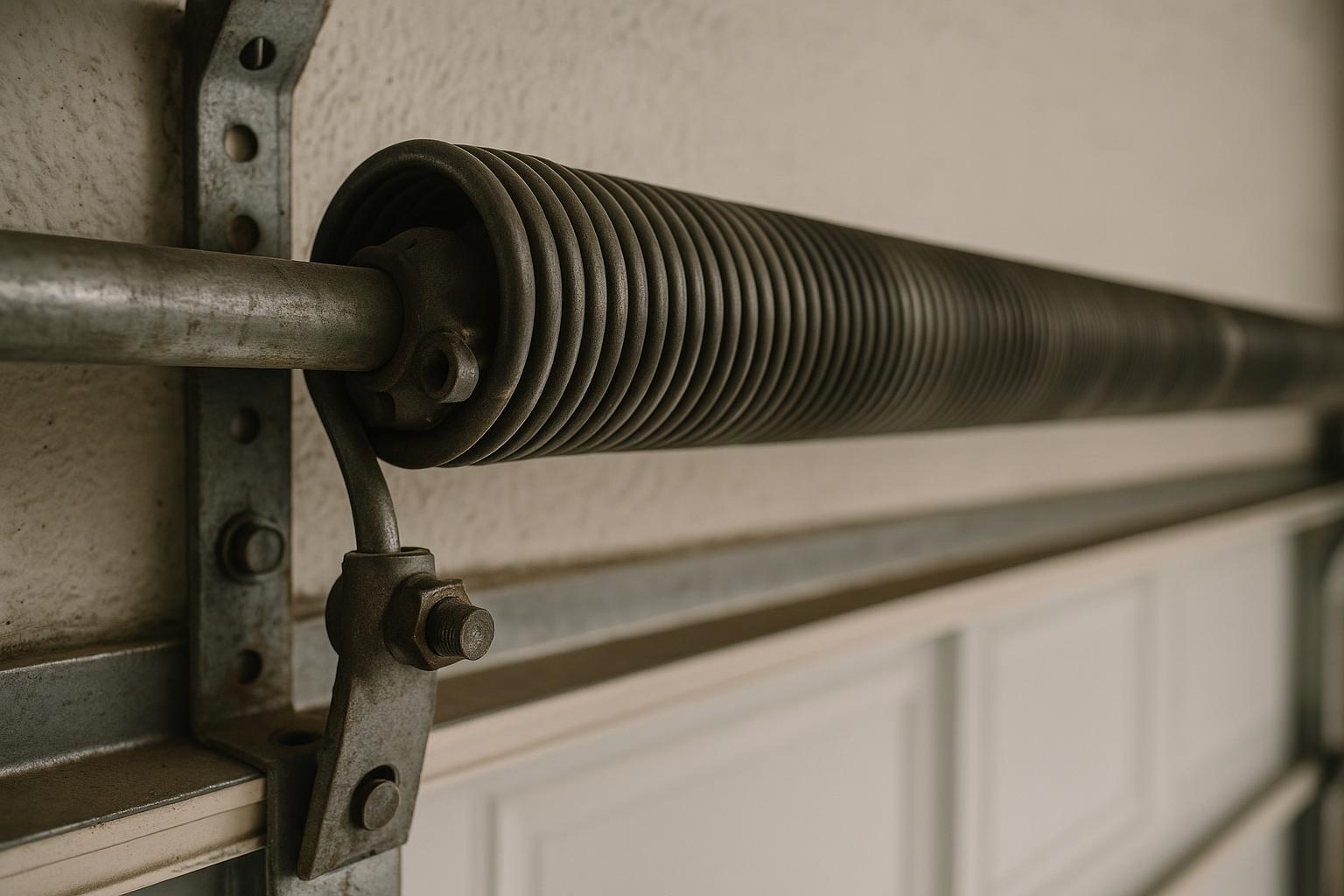
Torsion springs are mounted on a metal shaft above the garage door opening. They use torque to lift the door and are the more common type found in modern garage door systems. Torsion springs tend to last longer and provide smoother, more controlled movement.
Extension Springs
Extension springs run along the horizontal tracks on either side of the door. They stretch and contract to help lift and lower the door. Extension springs are typically found on older or lighter garage doors. They're generally less expensive but may wear out faster and can be more hazardous when they break if safety cables aren't installed.
Regardless of which type your home in Elizabethtown has, both will eventually need replacement.
Warning Signs Your Garage Door Springs Are Failing
Springs rarely fail without warning. Here are the most common signs that your garage door springs are nearing the end of their life:
- The door feels heavier than usual: If your garage door is difficult to lift manually or seems sluggish when the opener runs, the springs may be losing tension.
- Visible gaps in the spring coils: A torsion spring that's about to break will often show a visible gap or separation in the coils.
- The door opens unevenly: If one side of the door rises faster than the other, one of your extension springs may be weaker or broken.
- Loud bang from the garage: Many homeowners first discover a broken spring when they hear a loud sound — like a gunshot — coming from the garage. That's the sound of a torsion spring snapping under tension.
- The opener struggles or stops working: When springs fail, the opener has to bear the full weight of the door. This can cause the motor to strain, overheat, or stop functioning altogether.
- The door won't stay open: A garage door that slowly drifts closed or won't stay in the halfway position is a classic sign of worn-out springs.
Can You Replace Garage Door Springs Yourself?
This is one of the most common questions we get, and the honest answer is: we strongly advise against it. Garage door springs are under extreme tension. A torsion spring stores enough energy to cause serious injury or even death if it's improperly handled. Every year, DIY spring replacement attempts lead to emergency room visits across the country.
Professional garage door technicians have the tools, training, and experience to replace springs safely. At Elizabethtown Garage Door Experts, our team handles spring replacements regularly and can typically complete the job in under an hour.
Should You Replace Both Springs at the Same Time?
If your garage door uses two torsion springs or two extension springs, we almost always recommend replacing both at the same time — even if only one has broken. Here's why:
- Both springs have the same age and wear. If one has failed, the other is likely close behind.
- Mismatched springs cause problems. A new spring paired with a worn spring creates uneven tension, which can cause the door to open crookedly and put extra stress on the opener and tracks.
- It saves money in the long run. The labor cost is the same whether we replace one spring or two. Replacing both now avoids a second service call in a few months.
How to Extend the Life of Your Garage Door Springs
While springs won't last forever, proper maintenance can help you get the most out of them. Here are a few tips for homeowners in Elizabethtown and surrounding areas like Radcliff, Vine Grove, and Hodgenville:
- Lubricate the springs twice a year. Use a silicone-based or white lithium spray on the coils to reduce friction and prevent rust. Avoid WD-40, which is a solvent, not a lubricant.
- Schedule annual maintenance. A professional inspection can catch early signs of wear before a spring breaks unexpectedly. During a maintenance visit, we check spring tension, balance, and overall condition.
- Keep the door balanced. Disconnect the opener and manually lift the door halfway. If it stays in place, the springs are properly balanced. If it falls or rises, the tension needs adjustment — something a technician should handle.
- Consider upgrading to high-cycle springs. If you're replacing springs and plan to stay in your home for many years, investing in high-cycle springs can double or triple the lifespan of your setup.
When to Call a Professional
If you've noticed any of the warning signs mentioned above, or if your springs are approaching the seven-to-ten-year mark, it's worth having them inspected. Waiting for a spring to snap completely can leave you stuck — unable to get your car out of the garage on a busy morning or locked out during an evening in Rineyville or Cecilia.
At Elizabethtown Garage Door Experts, we offer fast, honest spring replacement services throughout Elizabethtown and the surrounding communities. We'll assess your springs, explain your options, and get your door running smoothly again — usually the same day you call.
Don't wait for a loud bang to remind you that your springs need attention. A little proactive care goes a long way toward keeping your garage door safe, reliable, and working the way it should.