
A Frustrating Problem That's More Common Than You Think
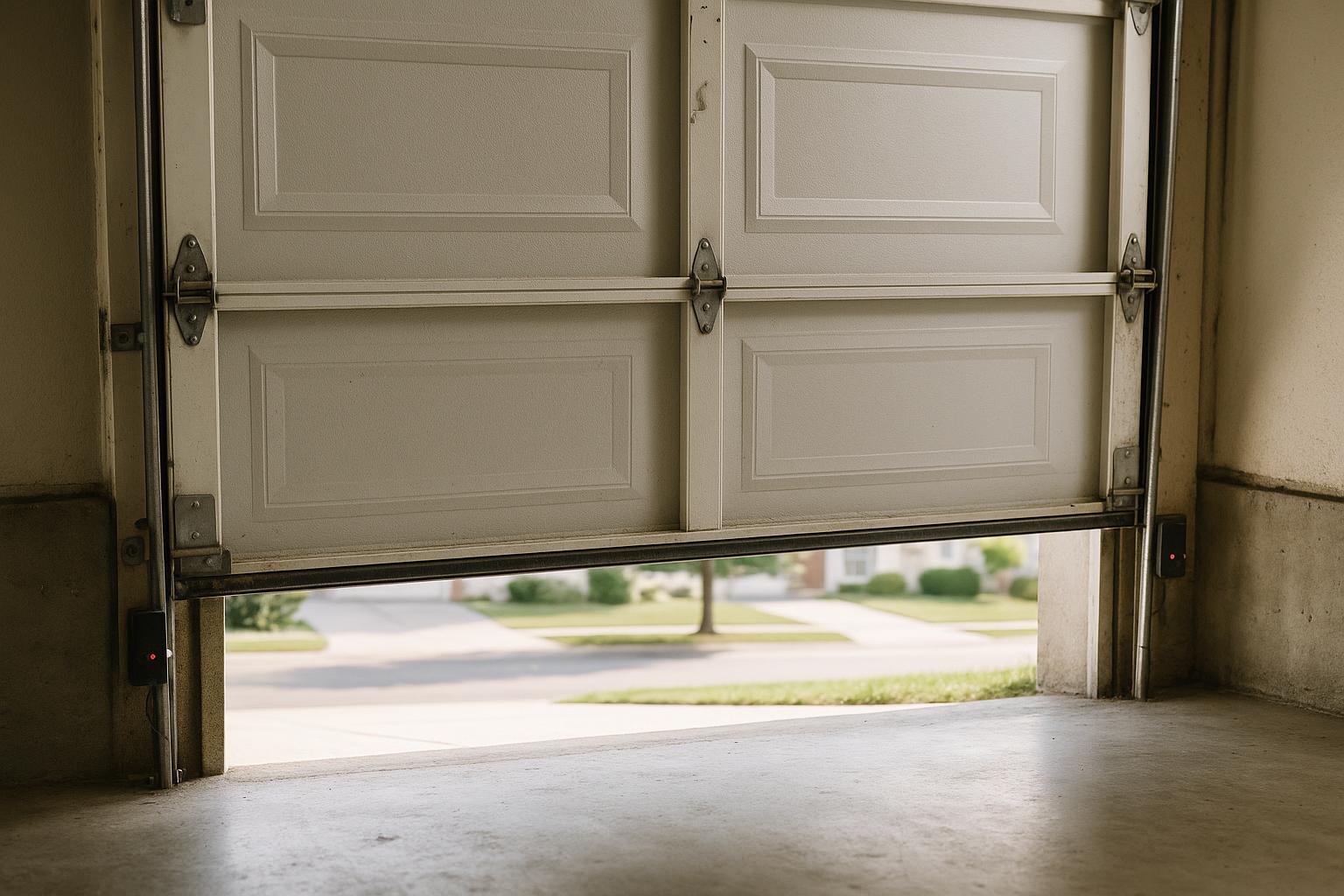
You press the button on your garage door remote, watch the door begin its descent, and then — just before it reaches the floor — it stops and reverses right back up. If this scenario sounds familiar, you're not alone. This is one of the most common garage door complaints we hear from homeowners in Elizabethtown, and it can range from a simple fix to a sign that something more serious needs attention.
A reversing garage door isn't just an inconvenience. It's a security risk, leaving your home vulnerable when you think it's closed. It can also be a safety hazard if the underlying cause involves worn-out parts or electrical issues. Let's walk through the most likely reasons your garage door reverses before closing and what you can do about each one.
1. Misaligned or Dirty Safety Sensors
This is the number one cause of a garage door that reverses before reaching the ground. Every modern garage door opener is equipped with two photo-eye safety sensors mounted near the base of the door tracks, one on each side. These sensors project an invisible beam across the opening. If anything breaks that beam — a bicycle, a trash can, a child, or even a cobweb — the door is designed to reverse immediately.
Here's what to check:
- Obstructions: Make sure nothing is blocking the path between the two sensors. Even a small object or a pile of leaves can trigger the reversal.
- Dirty lenses: Wipe the sensor lenses with a soft cloth. Dust, dirt, and spider webs accumulate quickly, especially during Kentucky's humid summers.
- Alignment: Each sensor typically has a small LED light. If one is blinking rather than solid, it's likely out of alignment. Gently adjust the sensor bracket until the light stays steady.
If cleaning and realigning the sensors doesn't solve the problem, the sensors themselves may be faulty and need replacement.
2. Incorrect Close-Limit Settings
Your garage door opener has close-limit settings that tell the motor exactly how far the door should travel before it's considered fully closed. If these settings are off — even by a small margin — the opener may interpret the floor as an obstruction and reverse the door as a safety precaution.
On most openers, the close-limit adjustment is a small screw or dial on the back or side of the motor unit. Turning it slightly increases or decreases the travel distance. If you recently had your opener installed or if the settings have shifted over time, this could be the culprit. Consult your owner's manual for specific instructions, or contact a professional if you're unsure about making the adjustment yourself.
3. Worn or Damaged Rollers and Tracks
Over time, the rollers that guide your garage door along its tracks can wear down, crack, or accumulate debris. When this happens, the door may bind or stick at certain points during its travel. The opener senses this resistance and interprets it as an obstruction, triggering the auto-reverse feature.
Inspect the tracks on both sides of the door for:
- Visible dents or bends in the metal
- Buildup of grease, dirt, or rust
- Rollers that appear cracked, chipped, or don't spin freely
Cleaning the tracks with a damp cloth and applying a silicone-based lubricant to the rollers can sometimes resolve the issue. However, if the tracks are bent or the rollers are severely worn, they'll need to be replaced. Homeowners across Elizabethtown and Radcliff often don't realize how much smoother their door operates after a simple roller replacement.
4. Broken or Weakening Springs
Your garage door springs bear the weight of the entire door, which can be anywhere from 130 to over 400 pounds depending on the material and size. When springs begin to weaken or break, the opener has to work much harder to move the door. This added strain can cause the opener's safety mechanism to kick in and reverse the door.
Signs of spring trouble include:
- The door feels unusually heavy when you try to lift it manually
- You hear loud creaking or popping sounds during operation
- The door closes unevenly or appears crooked
Important safety warning: Garage door springs are under extreme tension and can cause serious injury if handled improperly. Spring replacement should always be performed by a trained technician. This is not a DIY project.
5. Problems with the Garage Door Opener Itself
If you've checked the sensors, adjusted the limits, and inspected the mechanical components without finding a clear cause, the issue may lie within the opener's logic board or motor. Circuit boards can develop faults over time, especially after power surges — something that's not uncommon during storm season here in central Kentucky.
Signs that your opener may be the problem include:
- The opener light blinks a specific number of times after reversing (this is often a diagnostic code — check your manual)
- The remote works intermittently
- The opener makes grinding or humming noises but struggles to move the door
In some cases, a simple reset of the opener can resolve the issue. Unplug the unit for 30 seconds, then plug it back in. If the problem persists, the opener may need professional repair or replacement.
6. Weather-Related Factors
Elizabethtown experiences a wide range of temperatures throughout the year, from hot and humid summers to cold winter stretches. These temperature swings can cause the metal components of your garage door system to expand and contract, sometimes enough to affect alignment and operation. Cold weather can also thicken lubricants, making the door harder to move and more likely to trigger the auto-reverse.
Seasonal maintenance — including lubrication, hardware tightening, and sensor checks — goes a long way toward preventing weather-related issues. Many homeowners in the Vine Grove and Hodgenville areas schedule maintenance visits in the fall to prepare for winter and again in the spring.
When to Call a Professional
Some of the fixes above are straightforward enough for a handy homeowner to tackle. But if you've gone through the checklist and your door is still reversing, or if the problem involves springs, tracks, or electrical components, it's time to bring in a professional.
Continuing to operate a malfunctioning garage door can cause further damage to the opener, the door panels, or the mounting hardware — turning a minor repair into a much more expensive one. It can also compromise the safety of your family and the security of your home.
Keep Your Garage Door Working the Way It Should
A garage door that won't stay closed is more than a nuisance — it's a problem that deserves prompt attention. Whether the fix is as simple as wiping off a sensor or as involved as replacing a torsion spring, addressing the issue quickly saves you money and stress in the long run.
If you're dealing with a reversing garage door in Elizabethtown or any of the surrounding communities, Elizabethtown Garage Door Experts is here to help. We diagnose the problem accurately, explain your options clearly, and get your door back on track — usually the same day you call.